Menu
▾
▴
Re: [Flightgear-devel] RFD: FlightGear and the changing state of air navigation
|
From: Richard H. <rj...@za...> - 2017-07-04 18:53:32
|
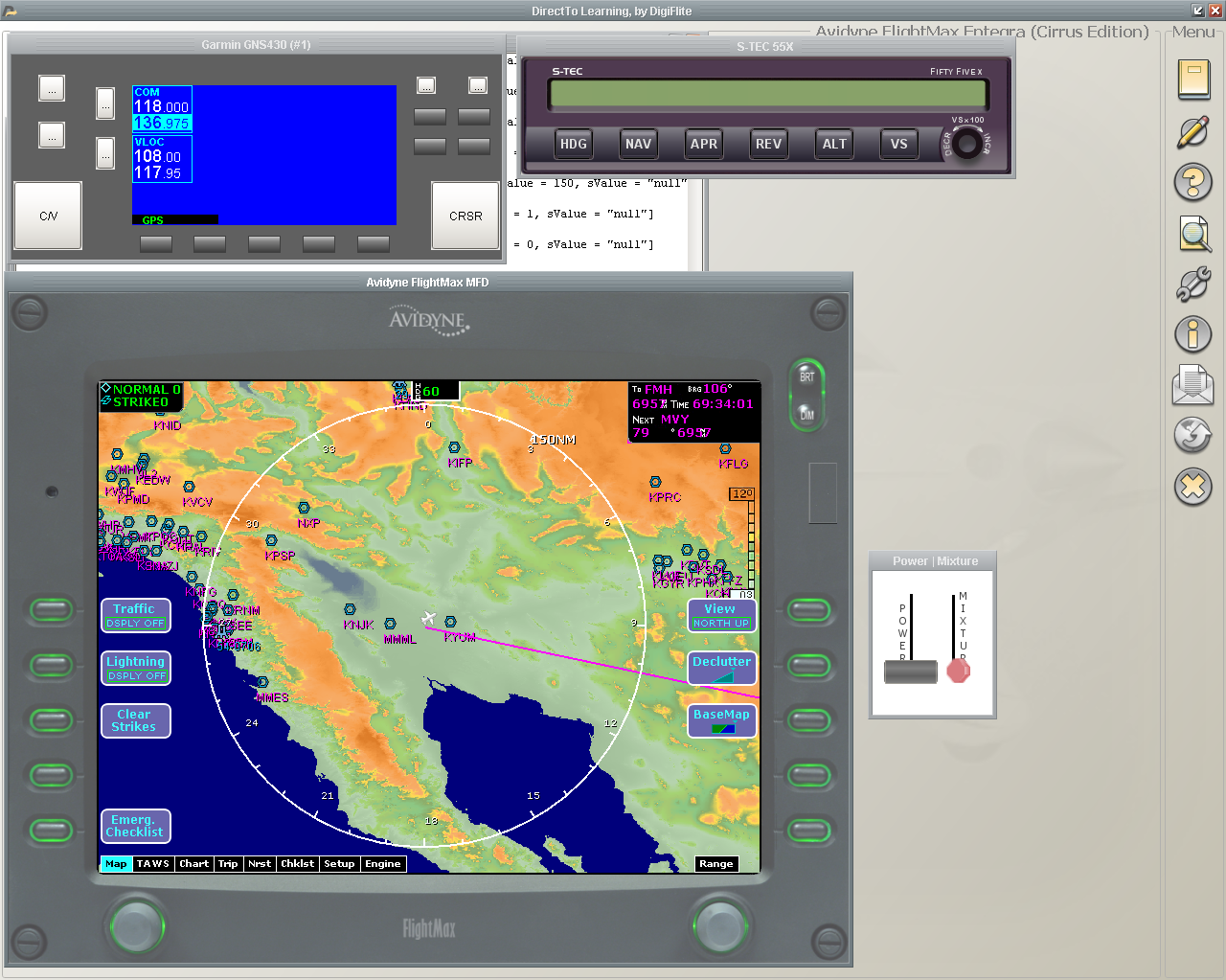
> Modern navigators are astoundingly-complex devices — probably an > order of magnitude more lines of code than FlightGear itself Complex yes; but not that complex; it is important that the emulated device operates exactly as the actual device, but (for example) it's not as important if there are slight differences in the route that it chooses. If you have a perfect knowledge of the device being simulated mostly it's a coding exercise; as FG already has most of the support required to build the pages, animate the buttons, and control the logic. The difficult part of emulating any device is understanding it[1] sufficiently to be able to build the pages - most of these devices are still page oriented. In 2007 I built a considerable portion of an EX5000 emulator[2] - took me months, but the hardest part was understanding how it worked, emulating it from the documentation alone. Then there was the the navdata which required an ARINC-424 importer, the terrain data, the approach plates using a Jeppesen product, and finding a performant way of rendering the terrain data, together with figuring out how to make the buttons and other events work dynamically with the pages. The MFD framework that is used on the Shuttle is more than capable of supporting a most of the requirements; Canvas is capable of rendering the displays. So it's possible to do this; but I'm not volunteering to do it; although if anyone does undertake it I will be happy to help with getting a framework together - it's the pages and the logic that will require understanding of the device, understanding that I don't have (and don't really want to acquire) ------------- [1] Using the freely available Garmin trainers would be a good place to start to build an emulator http://www8.garmin.com/support/download_details.jsp?id=9256 - rather than the documentation [2]http://chateau-logic.com/portfolio/direct-to-learning.png |